If you’re staring at a pile of incomplete assignments, looming final exams, and a child who seems completely overwhelmed, you’re not alone in this. End-of-semester stress hits differently in December. When your child has executive functioning challenges, managing school overwhelm in December can feel like watching them try to juggle presents while riding on a sleigh.
And here’s the thing: it’s not just about schoolwork. The December holiday season is happening at the exact same time. There are parties to attend, family gatherings to navigate, and a constant stream of distractions pulling focus away from academics. Between managing sensory overload and preparing for semester finals, it’s no wonder everyone’s at their breaking point. Your child is exhausted, you’re stressed, and suddenly every teacher is sending emails about missing work.
There’s a reason this feels difficult. The end-of-semester crunch challenges the exact skills that neurodivergent students struggle with most. But with the right approach and some practical semester finals tips, you can help your child get through this without everyone falling apart.
Why December Makes Everything Harder
The perfect storm happens when three things collide: academic pressure, holiday chaos, and sheer exhaustion.
Your child is being asked to plan ahead, prioritize tasks, manage time, and follow through on long-term projects—all while their brain is screaming about holiday movies, gift lists, and the promise of winter break just around the corner. For students with executive functioning challenges, these competing December demands can be paralyzing.
Teachers are rushing to finalize grades and may be reaching out more frequently about incomplete work. You’re juggling your own holiday responsibilities while trying to support your child academically. Everyone’s capacity is stretched thin, and the sheer volume of everything that needs to happen can make it hard to know where to even start.
Here’s what helps: We start where the student is—not where we wish they were. That means accepting that right now, in this moment, things are hard. And that’s okay. We’re going to work with what we have.
Strategy #1: Triage the Grade Book Together
Not all assignments carry the same weight, and trying to tackle everything equally is a recipe for burnout.
Sit down with your child and pull up their grades in each class. Look for the “bubble” grades—the ones sitting at 78% that could move up to a B, or the 58% that could become passing with focused effort. These are your priorities.
If your child has a solid A in English that’s unlikely to change, that class can take a backseat for now. This isn’t about giving up—it’s about being strategic with limited time and energy.
Here’s what this looks like in real life: One family I worked with discovered their daughter had a 69% in History but an 92% in Math. They were spending hours on Math homework every night because she enjoyed it. Once they shifted focus to History—specifically the three missing assignments that would bump her grade to passing—the whole dynamic changed. She knew exactly what mattered, and that clarity reduced her anxiety significantly.
If the priorities aren’t obvious, reach out to teachers for guidance. Ask which assignments will have the biggest impact on the final grade. Many teachers are willing to help prioritize or even extend deadlines if they know a student is working on a concrete plan.
Strategy #2: Create a December Countdown Plan
Executive functioning challenges often mean that your child can’t hold all the pieces in their head at once. They need to see it to manage it.
Create a physical or digital countdown calendar that shows every remaining day until winter break. Mark all unchangeable deadlines—semester finals, project due dates, and last days to turn in late work. Then, work backward to assign specific tasks to specific days.
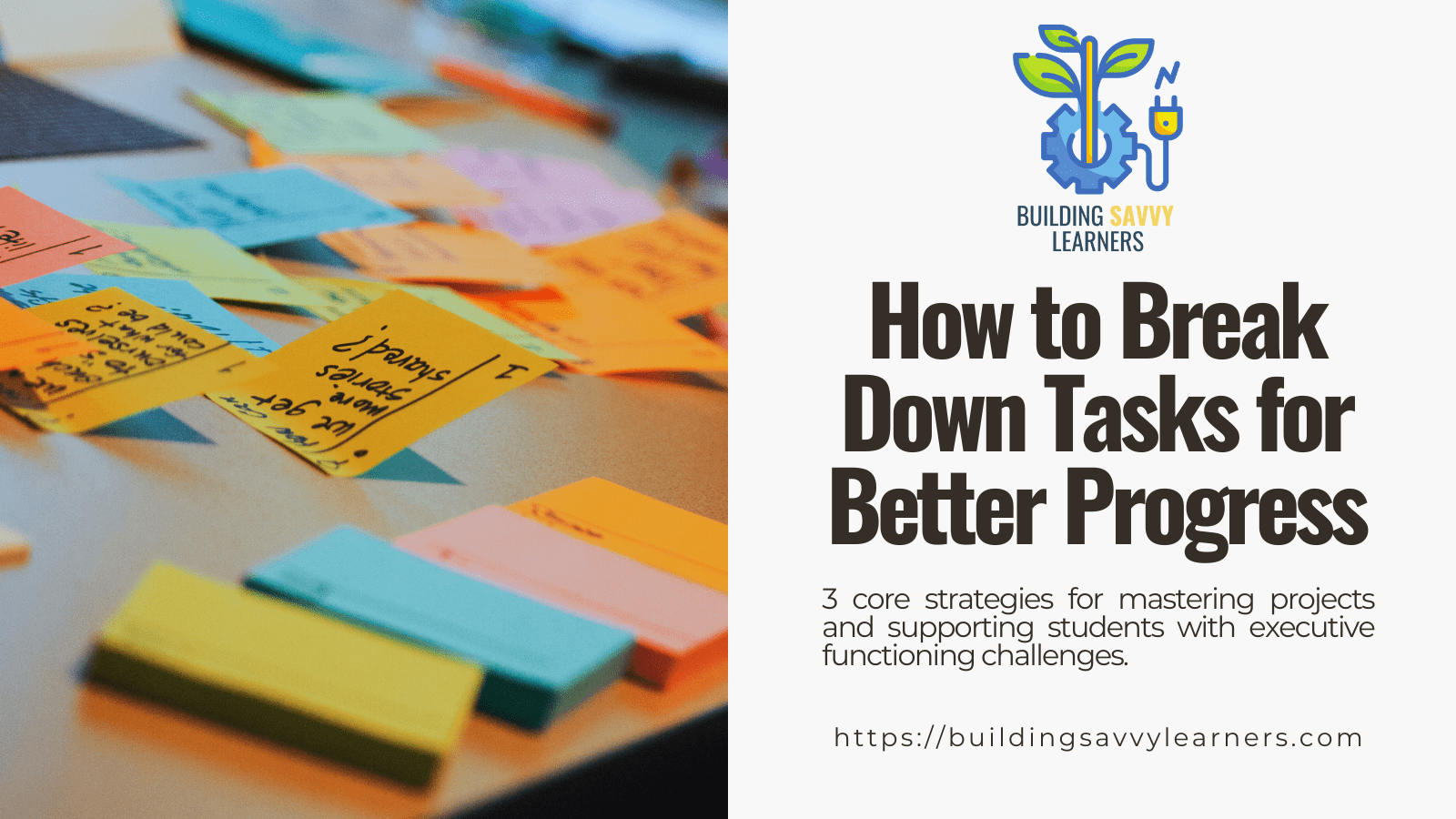
The key is chunking. A research paper due in two weeks isn’t one task—it’s choosing a topic, finding sources, writing an outline, drafting sections, and editing. Break it down into the smallest possible steps, and your child will see forward progress instead of just a looming deadline.
One family used sticky notes on a poster board, with each note representing one small task. Every time their son completed something, he physically moved it to the “done” column. That visual progress was incredibly motivating and helped him see that the mountain of work was actually manageable.
Strategy #3: Semester Finals Tips That Actually Work
Finals deserve special attention because they often carry significant weight in determining final grades. Here’s how to approach them without adding to the December overwhelm:
Start with a finals inventory. List every final exam or assessment your child has, along with the date and format (multiple choice, essay, project, etc.). Not all finals are created equal—some might be comprehensive while others only cover recent material.
Work backward from each exam date. If a History final is on December 18th, mark December 17th for a final review, December 15th-16th for practice questions, December 13th-14th for reviewing notes, and so on. This creates a realistic study timeline rather than cramming everything the night before.
Focus on active studying, not passive reading. For students with executive functioning challenges, re-reading notes rarely works. Instead, try practice problems, flashcards, teaching the material out loud to someone else, or creating simple summary sheets. The more active and engaging the study method, the better it sticks.
One of my favorite semester finals tips: Create a “quick reference sheet” for each subject—one page with the most important formulas, concepts, or vocabulary. Even if your child can’t bring it to the exam, the act of creating it is powerful for studying because it helps them to distill the key ideas into a single page.
Strategy #4: Embrace "Good Enough" for Now
This is hard for many parents to hear, but during this triage period, perfection isn’t the goal—completion is.
We’re building systems, not relying on willpower. Right now, the system needs to be: identify what matters most, do what’s necessary to get it done, and keep moving forward. Some assignments might be turned in at 70% effort instead of 100%, and that’s okay.
This doesn’t mean your child stops caring or stops trying. It means recognizing that in a crisis, we make strategic choices about where to invest our limited energy.
Set up a daily focused work period—ideally 30 to 60 minutes—where your child works without distractions. This should be a non-negotiable routine, not something that happens only when they “feel motivated.” Turn off phones, close unnecessary tabs, set a timer, and tackle one thing at a time.
Celebrate small wins. Each completed assignment, each study session, each step forward matters. Your child needs to feel momentum, not just pressure.
What If This Doesn't Work?
Sometimes you do all of this, and your child still shuts down. They might refuse to engage, insist nothing matters, or become overwhelmed despite your best efforts.
This isn’t a motivation issue—it’s an executive function skill gap. And sometimes, the skills just aren’t there yet to execute the plan independently.
In these moments, consider working alongside your child. You don’t do the work for them, but you become the external executive function support they need. You might read the assignment out loud while they type, sit next to them during work time, or help them get started on the first sentence.
If multiple teachers are reporting similar concerns, or if your child’s stress level seems beyond normal end-of-semester stress, this might be a good time to reach out to the school counselor or consider additional support.
And remember: this intense period is temporary. The focused effort required now will pay off with a well-deserved break. It’s just for now, not forever.
Your Next Step for Helping Your Student Finish the Semester
Before your child goes to bed tonight, spend 10 minutes doing this together: List every class. Write down the current grade. Circle the ones that need the most attention. That’s it—just identify the priorities.
Tomorrow, you can map out a plan. But tonight, just get clear on what matters most. Small steps add up, and you’ve just taken the first one.
You know your child better than anyone. You see them struggling, and you’re showing up to help them through it. That’s exactly what they need right now—not a perfect plan, not a miraculous turnaround, just someone in their corner helping them take one step at a time.
You’ve got this. And more importantly, they’ve got you.
Need more support? If executive functioning challenges are making school consistently difficult for your child, we can help. Building Savvy Learners specializes in coaching students with ADHD, anxiety, and other learning differences to develop the skills they need to succeed. Schedule a 30-minute, no obligation discovery call to learn more.